|
Last time I annoyed you with my stats, we went through a worldwide whirlwind for the July 2013 Roundup. Today we focus on Europe, where apart from one main island of growth (literally and figuratively: yes I am speaking about you the UK), the new car market recession seems to know no end. Not interested in the old, grumpy continent? That's totally fine, I have prepared something else for you: you can check out sales stats for 176 additional countries and territories on my blog. Go on, I think you'll like… Back to Europe.
While the US new car market is in total euphoric mode, up 17% year-on-year in August to return to annual rates not seen since 2007, Spain has experienced its weakest month of August on record, and in France we are looking at the lowest monthly sales figure in 37 years… This is a much worse situation than Greece, whose bankruptcy as a country has been much publicised with a car market known for its volatility, at its lowest in 'only' 26 years this year. In this context, some insiders, including Renault-Nissan CEO Carlos Ghosn and Ford Europe CEO Stephen Odell, don't see a return to growth until 2016 at the very earliest. So the European recession is here to stay. Well I will push this theory further and ask: will the Western European new car market ever grow again? Or has it reached saturation at around 12 million annual units?
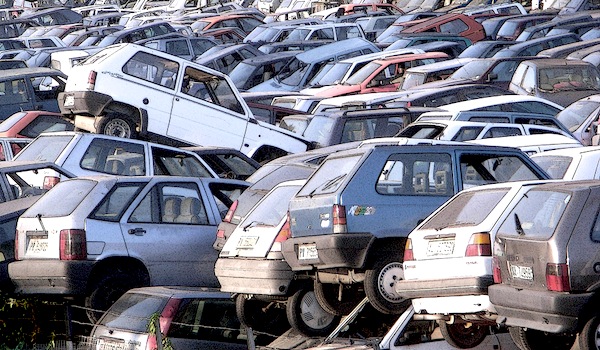
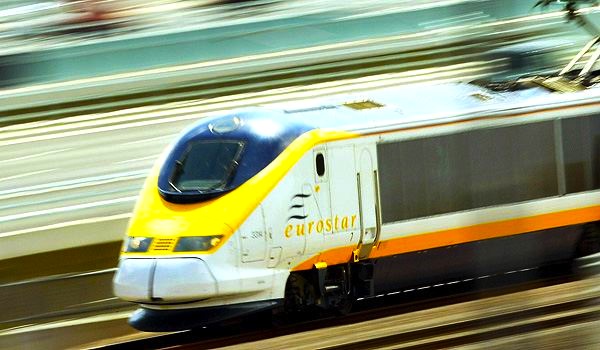
There are a few signs on the continent that the car may not be the preferred mode of transport in the future, simply because other options, mainly public transport, offer a much cheaper and sometimes more convenient outlook. The first striking event that could announce this trend happened in 2012 in Italy: for the first time since the 2nd World War, there were fewer cars in circulation in the country than the year before. More cars were scrapped than bought. With a new car market down a further 9% in 2013, chances are this will happen again this year…
A demographic trend is also at play in Europe, with most countries seeing their population ageing and stagnating, meaning less working people and less people in 'real' need of a car to commute every day. Now let's not get ahead of ourselves, all is not doom and gloom for the European new car market and no time for car manufacturers to abandon the continent just yet! Proof: UK sales display insolent health this year, up 10% year-on-year and, most importantly, boosted by private demand, not leases or rentals. Denmark is posting record year after record year in spite of very high taxes on the price of cars. Also, saturated markets like Canada and Australia are reaching record levels in 2013. But their geography makes public transport a challenge and keep the car essential.
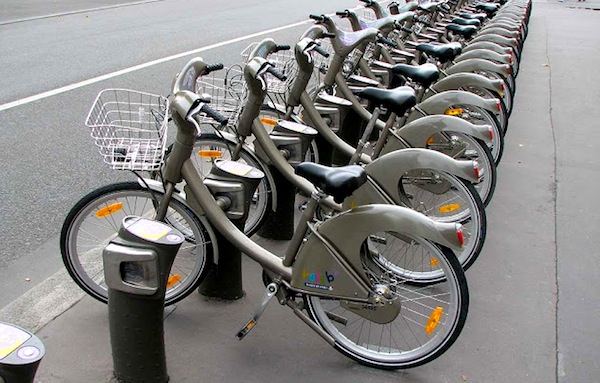
And this is the core of the European trend. The cities of Europe are extremely well-connected, both with each other and inside out, with many transport options to choose from for each trip. For example, 58% of households living in Paris do not own a car vs. 19% nationally! A very dense metro system coupled with the recent addition of electric car- and bike-share programs (autolib' and velib') have made this car-free situation possible.
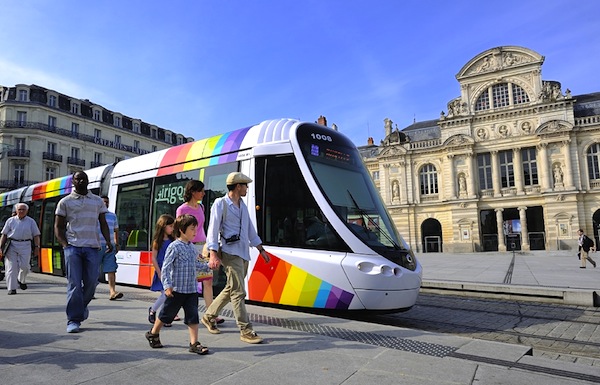
Now let's zoom onto France, where the tramway is making a spectacular resurgence with no less than 17 cities building a new network from scratch in the last decade. In France, since 2000 no less than 16 cities have built a tramway network for the most part from scratch! These cities are Montpellier (2000), Orleans (2001), Nancy, Caen (2002), Bordeaux (2004), Clermont-Ferrand, Mulhouse, Valenciennes (2006), Le Mans, Nice, Toulouse (2007), Reims, Angers (2011), Brest, Dijon and Le Havre (2012) and Tours (2013). 5 more are due to receive a tramway line before 2020: Besancon, Avignon, Amiens, Lens and Toulon…
A spectacular resurgence which has almost always prompted a sharp increase in the general use of public transport in these cities: in Toulouse for example, public transport, including but not limited to trams, use has increased by 35% since 2007. More frequent public transport use means less frequent car use, right? Not so simple. Many studies have tried to demonstrate that the appearance of a tramway network reduces the utilisation of the car in the city concerned, but the correlation is proving relatively hard to isolate. What seems to happen is the car is less used inside these cities, or at least on the routes served by the tramway network, but still used to get to the tram or public transport hub. 'Relay' parking lots have had to be created at the periphery of these cities to allow commuters to park their car before they jump on public transport on their daily commute. Toulouse, the 2nd city in France for relay-parking capacity, is already saturated and has launched the creation of 4,000 additional spots. In Tallin, Estonia, public transport is now free for the city's residents to encourage people to leave their car at home, or even better (worse for car manufacturers), not buy one in the first place. An interesting experiment that however shows the lengths needed to make commuters give up their car. What about inter-city commutes and inter-regional trips? In spite of a very dense train and plane network, the car is still king by very far. Out of 100 trips of more than 100 km in France, 75 use the car, 17 the train, 6 the plane and 2 the bus. Yes, car manufacturers can breathe a sight of relief: Europe loves cars, and is not ready (yet) to give it up! What is your opinion? Is public transport a valid option in your city? Do you find yourself using your car less than you used to? Can you imagine a life without a car? I'm keen to hear your views so please comment on here if you want to share anything relevant to this subject. Sources: www.insee.fr, ladepeche.fr, La Croix, www.transbus.org Matt Gasnier, based in Sydney, Australia, runs a blog named Best Selling Cars Blog, dedicated to counting cars all over the world. from The Truth About Cars http://www.thetruthaboutcars.com | |||
| | |||
| | |||
|
Saturday, September 7, 2013
Best Selling Cars Around The Globe: Will The European New Car Market Ever Grow Again?



Subscribe to:
Post Comments (Atom)
No comments:
Post a Comment